
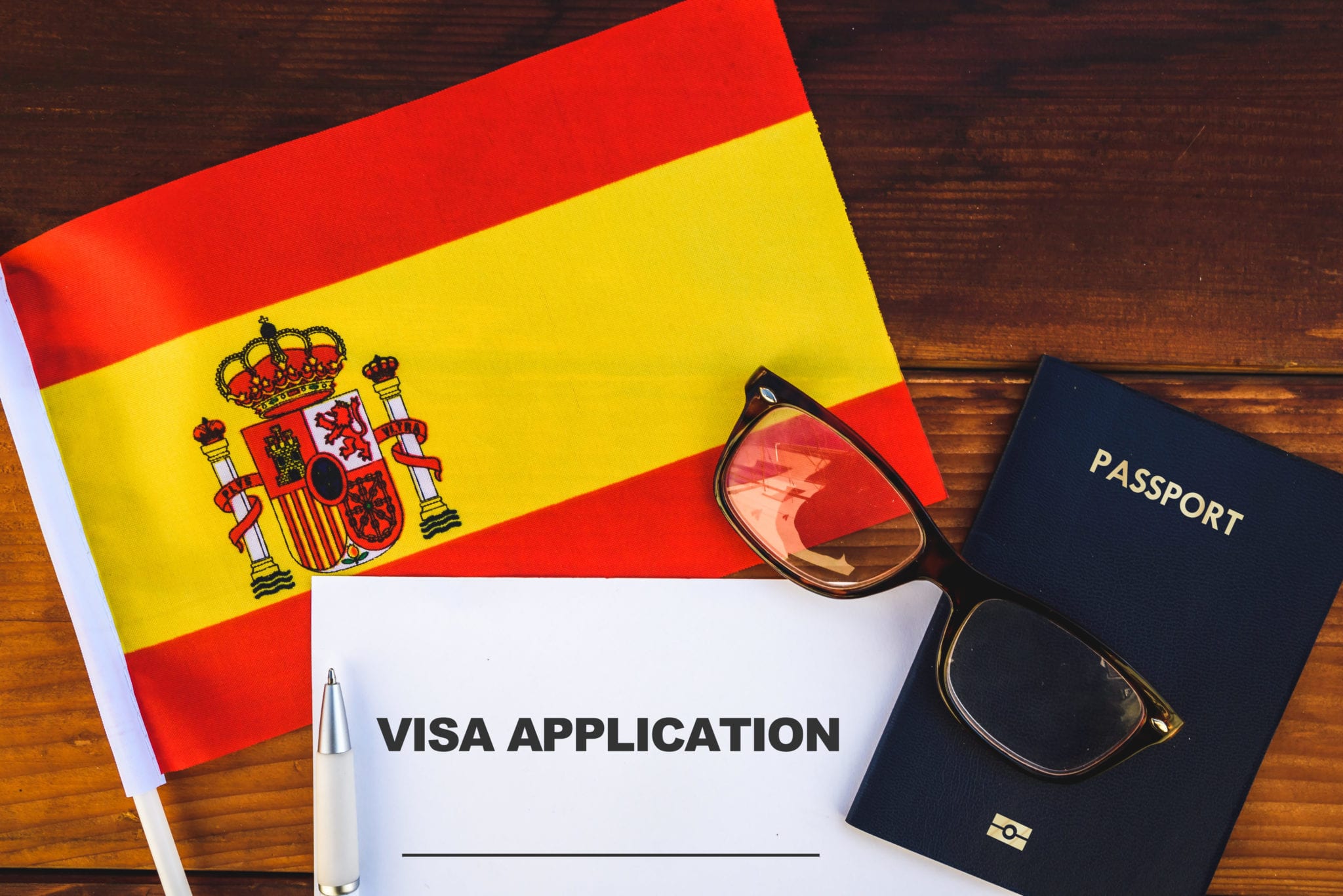
The Spain remote work visa has turned one of Europe’s most loved countries into a serious base for non European remote workers and digital nomads. Sunny winters, late night tapas, fast internet, and Schengen access all in one package, while you keep your foreign job or freelance clients.
If you are sitting in a home office somewhere far from the Mediterranean and wondering whether the Spain remote work visa is real, practical, and worth the hassle, the short answer is yes, provided you meet the rules and treat this like a serious relocation project, not a long vacation.
This guide walks you through how the Spain remote work visa works, who qualifies, realistic income thresholds, tax implications, and a practical step by step plan to apply and actually settle into life in Spain.Throughout, assume we are talking about the official program created under Spain’s Startup Act, often called the “Digital Nomad Visa” or in legal language “visado para teletrabajo de carácter internacional”. BOE+1
Table of Contents
What is the Spain remote work visa?
The Spain remote work visa is a residence route for non EU and non EEA citizens who work remotely for a company or clients located outside Spain. It lets you live in Spain while your main income stays foreign and your work is delivered through digital tools. strongabogados.com+1
Key structural points:
- It was launched in January 2023 as part of a wider Startup Act that aims to attract talent and investment.
- If you apply from abroad through a consulate, you usually receive a visa valid for up to 1 year.
- If you apply from inside Spain in the correct legal channel, you can obtain a residence permit valid for up to 3 years from the start, renewable for a total of up to 5 years.
- After 5 years of legal residence, many holders can transition to permanent residency if they meet standard residency rules. Global Citizen Solutions
In other words, the Spain remote work visa is not a tourist loophole. It is a formal residence path that can turn into long term life in Spain if you want that.
Core eligibility for the Spain remote work visa
Every consulate interprets details slightly differently, but the big building blocks are consistent across sources. Get Golden Visa+2Citizen Remote+2
Expect to demonstrate:
- Remote employment or freelance work outside Spain
You must work for a company based outside Spain or have freelance clients who are mainly outside Spain. Spanish law is very clear that the services are for a non Spanish employer or client base. strongabogados.com+1 - Stable prior relationship: Guides and legal analyses consistently mention that you should have:
- At least 3 months of remote work in your current role, and
- A company or business that has been operating for at least 1 year. Nomads Embassy+1
- Qualifications and experience: Recent summaries of official practice mention either:
- A university degree or similar higher qualification, or
- At least 3 years of relevant professional experience. VisaHQ+1
- Clean background: You will need:
- A criminal background check from countries where you have lived recently
- Often, proof that you have not been convicted in the last 5 years of certain serious offenses
- Health insurance
Private health insurance with coverage in Spain is required in most cases, usually without co-payments and at a level comparable to the Spanish public system. Ministry of Foreign Affairs+1 - Financial self-sufficiency: This is where many applications live or die, and where most of the confusion around the Spain remote work visa comes from.
Income requirements for the Spain remote work visa
The law pegs the financial requirement to the Spanish minimum wage, normally at 200 percent of the monthly minimum salary for the main applicant. In practice, this works out to around 2,700 to 2,800 euros per month in recent updates, with some sources quoting 2,762 to 2,763 euros per month as the working figure for 2025. NIM Immigration Lawyers Spain+2Immigrant Invest+2
Different resources and consulates express it slightly differently:
- Some legal firms describe it as at least 2,762 to 2,763 euros per month, based on 200 percent of the minimum wage on a 12 payment basis. NIM Immigration Lawyers Spain+1
- Other guides mention around 2,400 to 2,760 euros per month as a minimum, with higher thresholds for dependents. oysterhr.com+1
There are also add ons for family members, typically a percentage of the base requirement for a spouse and each child. If you want to bring a partner and children under the Spain remote work visa, aim significantly higher than the bare minimum.
Documents used to prove income include:
- Work contracts that clearly state your position and salary
- Recent pay slips
- Bank statements showing regular incoming payments
- For freelancers, contracts plus a history of invoices and payments
If you are barely at the threshold, you are increasing your risk. From a practical standpoint, treat the legal minimum as the bare floor and aim for a buffer that would make sense to a skeptical case officer looking at cost of living in Spain in 2025.
How long you can stay with the Spain remote work visa?
Putting together multiple official and legal sources, you basically have two main strategies.
- Apply from your home country consulate
- You receive a Spain remote work visa valid for up to 1 year.
- When you arrive in Spain you complete residence formalities and can extend later.
- Enter Spain and apply from within
- If your nationality allows visa free Schengen entry, you can arrive as a tourist.
- Before your 90 days are up, you submit a residence application for the remote work route.
- If approved, you receive an initial residence permit for up to 3 years.
Both paths can usually be renewed so that your total time under the Spain remote work visa track can reach 5 years, at which point you can explore permanent residency if you meet standard residency rules, including spending at least 183 days per year in Spain. Global Citizen Solutions+1
Tax basics for the Spain remote work visa
People get excited about the weather and tapas, then get wrecked by ignoring tax. So let us be blunt.
If you spend more than 183 days per year in Spain, you are typically considered tax resident there. That means Spain has the right to tax your worldwide income by default.
However, the Spain remote work visa program is tied to a special tax regime that can be attractive for many foreign remote workers. Under this regime, often linked to the so-called Beckham Law, qualifying remote workers can choose to be taxed more like non-residents for a period, at a flat rate around 24 percent on income up to a high threshold such as 600,000 euros per year. Get Golden Visa+1
Important points:
- You still need to register correctly and opt in to the regime.
- Double tax treaties with countries like the United States, Canada, Australia, and many others reduce the risk of being taxed twice on the same income, provided you structure things correctly. Global Citizen Solutions+1
- If you ignore tax planning and just “wing it”, you could face back taxes and penalties later.
This is one area where paying for a good Spanish tax advisor is not optional. The Spain remote work visa puts you inside the system. Treat it like the grown up move that it is.
Step by step: how to apply for the Spain remote work visa
Exact steps vary by consulate, but a simple framework looks like this. Ministry of Foreign Affairs+2strongabogados.com+2
- Confirm you actually qualify: Before you invest energy, check three things honestly:
- Your income is safely above current thresholds for the Spain remote work visa.
- Your remote job or freelance setup is clearly foreign and can be documented.
- You can show a degree or at least three years of relevant professional experience.
- Gather documents
Expect to prepare, translate, and possibly apostille many of the following:
- Passport valid for at least a year
- Work contract or freelance contracts that clearly mention remote work and permission to work from Spain
- Letter from employer confirming your remote status and length of the relationship
- Proof that the company has operated for at least one year, for example company registration or tax documents
- Bank statements and pay slips proving income that meets Spain remote work visa levels
- Criminal background checks for the last countries where you resided
- Private health insurance policy valid in Spain
- Proof of address either in your home country (for the application) or rental bookings in Spain
- Book your appointment
For consulate applications, you will nearly always need a pre booked appointment. On the official Spanish consulate sites, look for pages mentioning “Digital Nomad Visa” or “Visado para teletrabajo de carácter internacional”. For example, the Spanish consulate in London has a dedicated page that lists required documents, forms, and fee details. Ministry of Foreign Affairs - Submit and attend the interview
At your appointment you will:
- Hand over forms and supporting documents
- Pay the visa fee
- Answer questions about your remote work, your employer, income, and plans in Spain
If you apply from inside Spain, you submit through the appropriate immigration office or online platform, often with help from a gestor or lawyer. strongabogados.com+1
- Wait for a decision
Processing times are usually described in the range of 15 to 45 days once a complete application is submitted, though delays do happen. Get Golden Visa+1 - Arrive in Spain and complete registration
After a positive decision for the Spain remote work visa, you still need to:
- Enter Spain before the visa expiry date
- Obtain your NIE (foreign identity number)
- Register your address locally
- Provide fingerprints and pick up your residence card (TIE)
Only then are you fully set up as a legal Spain remote work visa holder.
Read Also: Digital Nomad Visa Guide 2025: 50+ Countries Offering Remote Work Visas
Best places to live on the Spain remote work visa
The Spain remote work visa does not lock you to one city. Once you have your residence card, you can live anywhere in Spain, as long as you maintain address registration correctly.
Some popular choices for remote workers: Get Golden Visa+1
- Barcelona, for tech, design, nightlife, and endless coworking spaces.
- Madrid, for big city energy, central transport, and serious professional networks.
- Valencia, for a more relaxed coastal life with lower rents than Barcelona.
- Málaga and the Costa del Sol, for sun and a growing international remote community.
- Bilbao and the Basque Country, for cooler weather, surf, and world class food.
When you think about where to live with the Spain remote work visa, do not just chase Instagram views. Think about:
- Time zone fit with your employer or clients
- Access to coworking spaces and English speaking services
- Airport connections for regular flights back to your home country
- Cost of living compared with your income
Common mistakes people make with the Spain remote work visa
There is a predictable set of errors that cause stress, rejection, or future problems. If you are serious about the Spain remote work visa, avoid these.
- Applying with borderline income
If you are at or just above the minimum required income with no buffer and weak documentation, you are asking the case officer to say no. Aim for clear, consistent, documented income. - Confusing remote work with “I will figure it out later”
The Spain remote work visa expects you to already have a job or business. It is not designed so you can arrive, then hunt for random online gigs from Spain. - Ignoring your tax position
Many people treat the Spain remote work visa like extended tourism and assume nobody will notice. That is a fast road to anxiety. Talk to tax professionals who know both Spain and your home country. - Underestimating bureaucracy
Spain loves paperwork. Documents often need translations and apostilles, and rules shift a little by consulate. That is exactly the type of friction that Aqee exists to remove, through checklists, vetted legal partners, and step by step guidance built from you, not from theory. - Focusing only on the visa and not on integration
Getting your Spain remote work visa approved is not the finish line. You still need to:
- Find housing in a tight rental market
- Open a bank account
- Learn enough Spanish for everyday life
- Build a social circle so you do not end up lonely in year one
Aqee’s approach to the Spain remote work visa is to treat those social and lifestyle pieces as seriously as the documents.
How Aqee can smooth your Spain remote work visa journey
If you are reading this because you want more than a three month tourist sprint, you probably care about feeling settled, not just “in Spain for a bit.” The Spain remote work visa is a tool, not the whole story.
Aqee’s role in your Spain remote work visa journey can look like this:
- Before you apply
- We help you sanity check eligibility for the Spain remote work visa, including income, evidence, and realistic timelines.
- You receive structured document checklists so you do not discover missing pieces the week of your consulate appointment.
- You get connected with vetted Spanish immigration and tax professionals when your situation is complex.
- As you arrive
- You land with rental search strategies tailored to your city and budget, not generic “find a flat” advice.
- Our Smart Document Wallet helps you keep residence cards, NIE, insurance, and contracts organized instead of scattered through email.
- You have a clear path to registering locally, setting up a bank account, and integrating into your new city.
- As you integrate
- Aqee’s quest based onboarding nudges you into the real Spain: signing up for language classes, joining coworking spaces, exploring hobbies, and meeting locals and other internationals.
- You get city specific challenges and rituals so your Spain remote work visa is not just you working alone in a random Airbnb.
The combination of a strong legal base through the Spain remote work visa plus intentional integration and community is how you turn “I work from Spain for a year” into “this actually feels like home”.
Practical next steps if you want the Spain remote work visa
If you are seriously considering this route, here is a simple action plan you can execute this week:
- Run your numbers
Calculate your last 6 to 12 months of income. If you are not clearly above 2,800 euros per month equivalent, you need a plan to either increase income or consider another destination for now. NIM Immigration Lawyers Spain+1 - Audit your work setup
Write down exactly who pays you, where they are based, and how your contracts describe your work location. If your employer does not yet formally allow remote work from Spain, you will need a new contract clause or letter. - Pull official information
Read the Spain remote work visa instructions for your specific consulate. Start with the Spanish Ministry of Foreign Affairs pages, such as the London consulate’s official guidance on the Digital Nomad Visa, since that shows you the level of detail Spain expects. Ministry of Foreign Affairs+1 - Decide how “all in” you are
Spain is attractive, but this is still a major move. Ask yourself:
- Are you willing to commit to tax and legal complexity for the benefits of living in Spain
- Are you excited to learn basic Spanish and engage with local life
- Are you ready to treat the Spain remote work visa like a project with deadlines and deliverables, not a fantasy
If the answer is yes, then the Spain remote work visa is a powerful way to secure a base in one of Europe’s most interesting countries while you keep your global earning power.
And if you want structure, accountability, and a softer landing, Aqee exists precisely for people like you, who want more from relocation than a stack of stamped forms.