
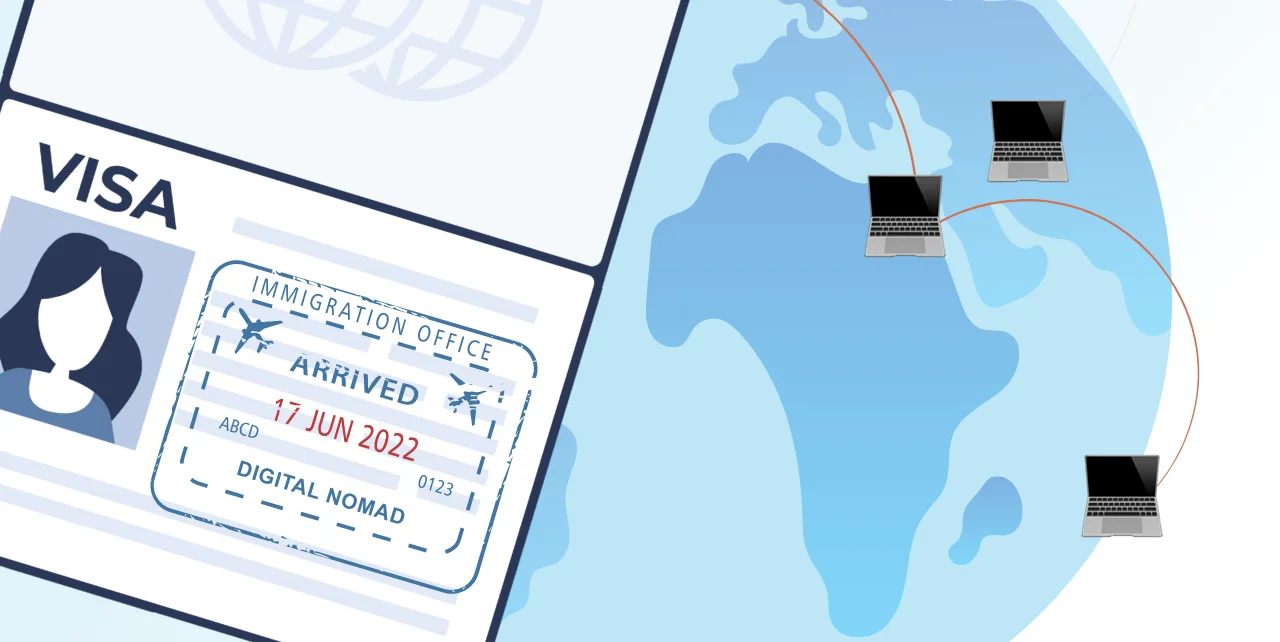
Living abroad while keeping your current job is no longer a fringe idea. For many people, it has become a realistic and intentional way to design life differently without sacrificing income or stability. At the center of this shift is the remote work visa, a legal pathway that allows people to live in another country while earning money from employers or clients based elsewhere.
For years, remote workers relied on tourist visas, visa runs, and informal arrangements to stay abroad. While this worked temporarily, it often came with stress, uncertainty, and legal risk. Remote work visas emerged to solve this exact problem. They give structure to a lifestyle that already exists and legitimacy to work that is already happening online.
This guide explains what a remote work visa really is, who it is for, how the process works, what documents and requirements matter most, and how to use this visa type to actually build a sustainable life abroad rather than just extending a long vacation.
Table of Contents
What a Remote Work Visa Really Is
A remote work visa is a residence permit designed for people who earn income from outside the country where they want to live. The core idea is simple. You live in one country, but your money comes from another.
Different governments use different labels. Some call it a digital nomad visa. Others place it under temporary residence permits for remote professionals or location independent workers. Despite the naming differences, the logic is consistent across most programs.
- You are allowed to stay longer than a tourist.
- You are allowed to live, rent, and register legally.
- You are not allowed to take jobs from local employers.
This structure benefits both sides. The host country gains residents who spend money locally without competing in the domestic job market. The visa holder gains stability, legal clarity, and the ability to plan life without constant fear of overstaying.
The most important distinction is that a remote work visa is not a shortcut to local employment. It is a framework for location independent income.
Who a Remote Work Visa Is For
Remote work visas are often marketed with glamorous imagery, but in practice they attract people with relatively stable and predictable lives. Governments are not looking for adventure seekers. They are looking for low risk residents who can support themselves.
Typical remote work visa holders include full time employees working for foreign companies, freelancers with recurring international clients, consultants running online businesses, and founders whose customers are not tied to a single country.
What matters most is not your job title, but how your income flows. Authorities want to see that your income is regular, documented, and sufficient to support you without local employment. If your earnings are chaotic, undocumented, or heavily dependent on cash, approval becomes harder.
In other words, remote work visas favor people who already operate with some financial discipline.
Core Requirements You Should Expect
While every country has its own rules, most remote work visa programs follow similar patterns. Understanding these patterns helps you assess eligibility before you invest time and money.
- Income thresholds are common. Countries usually set a minimum monthly or annual income, often linked to local wage levels. You are typically required to show proof of consistent earnings over several months rather than a single large payment.
- Proof of remote work is essential. Employees usually submit contracts showing they work for a foreign company and are allowed to work remotely. Freelancers and business owners submit client contracts, invoices, or business registration documents.
- Health insurance is almost always mandatory. Coverage must usually apply in the destination country and last for the full duration of the visa. Some programs specify minimum coverage amounts.
- Background checks are standard. Clean criminal records from your home country and sometimes from previous countries of residence are required.
- Basic administrative documents such as a valid passport, application forms, photos, and fees are non negotiable.
Some countries also ask for proof of accommodation, either temporary or long term, to demonstrate that you have a realistic plan upon arrival.
Read Also: Spain Remote Work Visa: Powerful 2026 Guide For Stress Free Relocation
Documents That Make or Break Applications
Most remote work visa rejections do not happen because the applicant is ineligible. They happen because documentation is weak, inconsistent, or unclear.
A strong application usually includes bank statements that clearly show income deposits, employment contracts or service agreements written in plain language, properly formatted invoices, and official insurance confirmation letters.
Organization matters. Clean PDFs with logical file names signal seriousness. Mismatched names, cropped screenshots, or unexplained income gaps raise questions.
Translations and notarization are often overlooked. If a government website says official translation, they mean it. Cutting corners here delays or kills applications.
Treat your documents as a portfolio. The easier it is for an immigration officer to understand your situation, the smoother the process becomes.
Choosing the Right Country for a Remote Work Visa
Not every remote work visa is right for every person. Approval is only the first step. Long term satisfaction depends on fit.
Time zones matter more than people expect. If your work hours destroy your sleep or isolate you socially, the novelty fades quickly.
Cost of living should be evaluated honestly. Rent, food, transport, healthcare, and workspace costs add up. A country may look affordable online but feel expensive once you factor in lifestyle expectations.
Tax rules require serious attention. Many remote work visa holders become tax residents if they stay long enough. That can trigger income tax obligations on worldwide earnings. Tax treaties may help, but they require correct filing and understanding.
Community and culture are often the deciding factor in whether people stay or leave. Access to social networks, language barriers, safety, and daily convenience shape quality of life more than visa conditions.
If you plan to move with a partner, children, or pets, dependent rules must be checked early. Some visas allow dependents easily. Others add income requirements or restrictions.
The Application Process Step by Step
While details vary, the general process is predictable.
- First, clarify your intent. Decide where you want to live, for how long, and under what conditions. Vague plans create weak applications.
- Next, research official sources. Government immigration websites are the authority. Blogs and videos are useful context, not legal truth.
- Then gather documentation. This is the longest phase. Income proof, contracts, insurance, background checks, and translations take time.
- After that, secure health insurance and accommodation proof that meets stated requirements.
- Submit the application carefully. Errors in forms, missing signatures, or incorrect fees cause unnecessary delays.
- Finally, prepare for arrival. Many countries require post arrival registration, biometric appointments, or resident card collection. Ignoring these steps can invalidate an otherwise approved visa.
Taxes and Legal Reality of Remote Work Visas
This is where many people get caught off guard. A remote work visa does not exist outside tax systems.
Spending sufficient time in a country often makes you a tax resident. Tax residency rules differ, but days spent in country, center of life, and economic ties all matter.
Some countries tax worldwide income. Others offer exemptions or special regimes. Your home country may still claim tax obligations depending on citizenship and domestic law.
Remote employees should also consider employer concerns. Some companies worry that employees working abroad create corporate tax exposure. Clear communication and written agreements matter.
Professional tax advice is not optional if you plan to stay long term. One consultation can prevent years of complications.
Read Also: Digital Nomad Visa Guide 2025: 50+ Countries Offering Remote Work Visas
Common Mistakes to Avoid
- Many remote work visa problems are self inflicted.
- Applying before income is stable enough leads to rejection. Waiting a few months often improves approval odds.
- Messy financial records raise red flags. Clean accounts tell a simple story.
- Ignoring translation or legalization requirements wastes time.
- Overstaying tourist visas while waiting can damage future applications.
- Assuming flexibility where rules are strict leads to problems later during renewal or reentry.
- Remote work visas reward preparation, not improvisation.
Turning a Remote Work Visa Into a Real Life
A visa gives permission to stay. It does not automatically create belonging.
People who thrive abroad use the visa as a foundation, not a finish line. They stabilize housing early, build routines, join local or international communities, and invest in language learning.
They pace travel instead of constantly moving. They treat the move as a real relocation, not extended tourism.
This mindset reduces burnout and increases satisfaction.
Is a Remote Work Visa Right for You
A remote work visa is not a cure for dissatisfaction. It amplifies whatever systems you already have.
If your income is unstable, stress increases. If you struggle with isolation, moving abroad intensifies it. If you avoid admin, bureaucracy becomes overwhelming.
But if you have steady work, curiosity, and patience for complexity, a remote work visa can unlock an entirely different way of living.
It allows you to keep your economic base while changing your environment. That combination is powerful.
Where Aqee Fits In
Legal permission is only one layer of relocation. Integration, community, and daily life matter just as much.
Aqee supports expats and remote workers after arrival by helping them navigate systems, connect with others, and move from survival mode to belonging. Rather than replacing official processes, it complements them by focusing on the human side of living abroad.
A remote work visa gets you in the door. How you build life once inside is what determines whether the move truly works.
Final Thoughts
Remote work visas exist because the world of work changed faster than immigration systems expected. They are a response to reality, not a loophole.
Used thoughtfully, a remote work visa allows you to live abroad legally, reduce uncertainty, and design life with intention. It is not about escaping responsibility. It is about choosing where responsibility is carried out.
For people ready to plan carefully, document clearly, and engage deeply with a new place, a remote work visa is not just permission to stay. It is permission to build something meaningful across borders.